















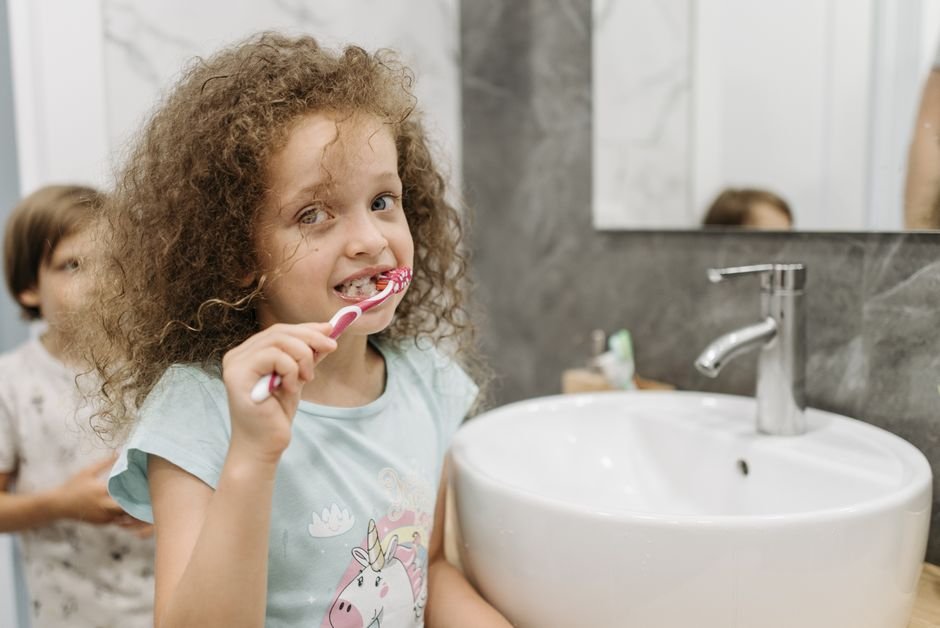


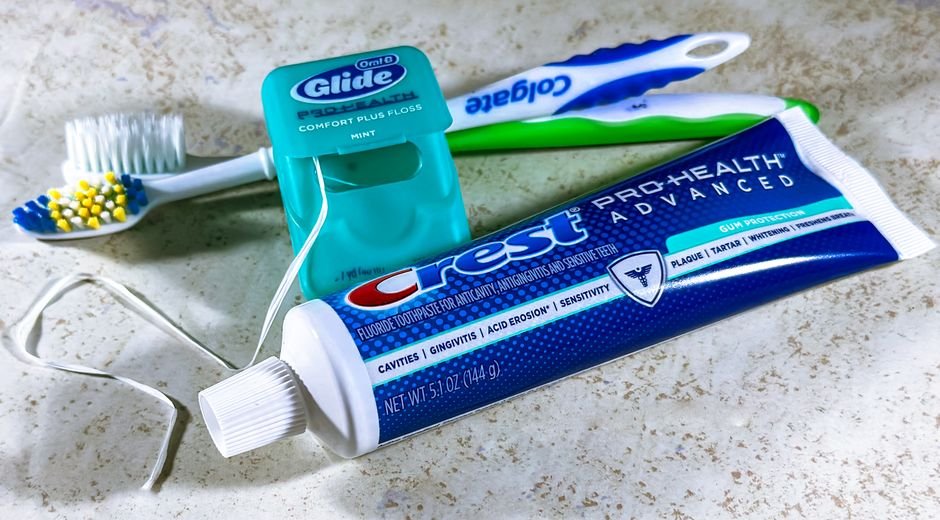














The right toothpaste for a young child is a fluoride toothpaste formulated for their age group, used in the correct amount for their stage of development — a smear for the very youngest children and a pea-sized amount once they are old enough to spit rather than swallow. Fluoride strengthens developing enamel and helps prevent decay, and age-appropriate formulas balance that protection with a lower risk should a small amount be swallowed during brushing. Flavour, texture and packaging matter too, because a toothpaste a child refuses to use provides no benefit at all.
Key takeaways
A well-formulated children’s toothpaste centres on fluoride as its active decay-fighting ingredient, usually at a concentration lower than adult toothpaste to reduce risk if swallowed. Beyond fluoride, look for mild, non-foaming detergents rather than strong ones, since young children often find intense foaming unpleasant and may refuse to keep brushing. Gentle abrasives are also preferable, as a child’s enamel is still maturing and does not need the more robust polishing agents found in whitening or tartar-control formulas designed for adults.
Avoid toothpastes marketed with whitening claims, strong mint intensities, or additional additives aimed at adult concerns such as sensitivity relief or tartar control, as these are unnecessary for children and can be off-putting. Simplicity is the guiding principle: a mild, fluoride-based paste with a flavour your child tolerates does the job. Reading the label for an age recommendation printed by the manufacturer is a reliable way to narrow down suitable options quickly without needing to compare long ingredient lists.
For the very youngest children, particularly before they can reliably spit, a smear of toothpaste roughly the size of a grain of rice is generally recommended. This tiny amount still delivers a protective benefit while keeping the total fluoride exposure very low if some is inevitably swallowed during brushing. As children grow and develop better control over spitting, usually somewhere in the preschool years, the amount can be increased to a pea-sized portion, which remains the standard recommendation right through childhood and into the teenage years.
Parents often assume more toothpaste means cleaner teeth, but this is not the case, and using excessive amounts simply increases the amount swallowed rather than improving the clean. Squeezing toothpaste directly onto a dry brush can also make portion control harder to judge visually, so many parents find it easier to dispense the toothpaste onto a plate or their own finger first and then transfer the correct amount onto the brush. Consistency in the amount used, brush after brush, matters more than any single ingredient.
Fluoride toothpaste is widely regarded by dental professionals as the most effective everyday tool for reducing tooth decay in children, because it helps remineralise enamel that has been softened by acid attacks from food and plaque. For most children, particularly once teeth begin to emerge, a fluoride toothpaste in an age-appropriate concentration is the recommended default, supervised closely so that only the correct amount is used and swallowing is minimised as much as possible.
Fluoride-free toothpastes exist and are sometimes chosen by parents of very young infants who are not yet reliably spitting, or in specific circumstances discussed with a dental professional. However, these formulas generally provide less protection against decay, since they lack the active ingredient responsible for strengthening enamel. If you are considering a fluoride-free option for any reason, it is worth discussing your child’s individual risk of decay with a dental professional first, so the decision reflects their particular needs rather than general preference alone.
Young children swallowing small amounts of toothpaste during brushing is common and, when age-appropriate amounts are used, is rarely a cause for serious concern. This is precisely why the recommended quantities are so small for younger age groups — the formulas and portions are designed with this likelihood in mind. Consistently using the correct amount for your child’s age and supervising every brushing session are the two most effective ways to keep any incidental swallowing well within an acceptable range.
If a child swallows a much larger amount than recommended, such as eating a significant portion of a tube out of curiosity, it is sensible to contact a health professional for advice rather than assuming it is harmless. Keeping toothpaste stored out of reach between brushing sessions, rather than left accessible on a low shelf or countertop, reduces the chance of this happening. Teaching children gradually to spit rather than swallow, through patient repetition and encouragement, is also a valuable long-term habit to build.
Taste and texture are often the deciding factor in whether a child cooperates with brushing at all, regardless of how well-formulated a toothpaste is on paper. Mild fruit flavours or gentle mint tend to be better tolerated by younger children than the strong, sharp mint intensities designed for adult palates, which can cause a burning sensation that discourages brushing altogether. Trying a few different mild flavours until you find one your child accepts without fuss is a perfectly reasonable approach.
Texture also plays a role, particularly for children who are sensitive to strong foaming or an unusual mouthfeel. Gel-based formulas are sometimes better received than thicker pastes, though this varies from child to child, so some experimentation may be needed. Involving your child in choosing between two or three suitable, age-appropriate options can also increase their willingness to brush, giving them a small sense of control over an otherwise adult-directed routine.
The transition away from a toddler-specific, lower-fluoride formula generally happens gradually as a child demonstrates reliable spitting and a good understanding of not swallowing toothpaste. Rather than a single fixed milestone, this is best judged by watching your child’s behaviour during brushing over several weeks, since children develop this skill at different rates. Many manufacturers print an age range on toddler formulas as a general guide, which is a reasonable starting point for the conversation.
Once a child is confidently spitting, a family or standard children’s fluoride toothpaste with a higher concentration than the toddler formula, but still lower than a full adult product, is usually appropriate. This staged approach ensures the level of fluoride protection increases in step with a child’s developing teeth and their ability to manage the brushing process safely. If you are ever unsure which stage your child has reached, a dental professional can offer guidance tailored to their specific development.
Toothpaste is only one half of an effective brushing routine; technique and duration matter just as much, if not more, for keeping a child’s teeth genuinely clean. Even the best-formulated toothpaste cannot compensate for brushing that is too quick, misses back teeth, or fails to reach the gumline where plaque tends to accumulate. Gently guiding a young child’s hand, or brushing for them until they have the coordination to do it thoroughly themselves, remains essential well beyond the toddler years.
A general guide of around two minutes of brushing, twice daily, gives toothpaste enough contact time with the teeth to be effective, since fluoride needs a reasonable duration to interact with enamel. Using a timer, a favourite song, or a brushing app can help young children brush for the full duration without losing interest halfway through. No toothpaste, however well chosen, replaces the fundamentals of a consistent, thorough, twice-daily routine supervised by an adult.
Some young children experience sensitivity, particularly around newly erupted teeth or areas where enamel has been weakened by early decay, and this can make brushing uncomfortable enough that they resist it. In these cases, a very mild, low-abrasion toothpaste is generally preferable to anything marketed as intensely whitening or tartar-controlling, since gentler formulas are less likely to aggravate already sensitive areas while brushing continues as normal.
Persistent sensitivity, visible white or brown spots on teeth, or ongoing reluctance to brush due to discomfort are all worth raising with a dental professional rather than managing indefinitely through toothpaste choice alone. A professional can assess whether the sensitivity relates to enamel development, an area of early decay, or another cause, and can recommend a toothpaste or additional preventive step suited to that specific situation, rather than relying on general advice alone.
The toothpaste a child grows up using, and the routine built around it, shapes attitudes towards oral hygiene well beyond early childhood. Choosing a product a child genuinely tolerates, rather than the one a parent personally prefers, reduces daily friction and makes consistent brushing far more achievable over months and years. Small positive experiences during brushing, built up gradually, tend to translate into a child who continues good habits independently as they grow older.
Rotating between a small number of approved, age-appropriate flavours can also prevent boredom without compromising on fluoride content or safety, keeping the routine fresh for a child who might otherwise lose interest. Ultimately, the goal of toothpaste selection is not to find a single perfect product but to find one that a child will accept reliably, twice a day, for the years it takes to establish brushing as an automatic, lifelong habit.
Fluoride toothpaste is generally recommended from the point teeth first appear, using a very small smear rather than a full pea-sized amount for the youngest children. The concentration and quantity are increased gradually as a child grows and becomes reliable at spitting rather than swallowing.
Fluoride-free toothpaste is generally considered safe to use, but it typically offers less protection against tooth decay than a fluoride formula, since it lacks the ingredient responsible for strengthening enamel. Discussing your child’s individual decay risk with a dental professional can help you decide whether it is a suitable choice.
A smear is roughly the size of a single grain of rice, used for very young children who are not yet spitting reliably. A pea-sized amount is noticeably larger, about the size of a small garden pea, and is the standard recommendation once a child can spit out toothpaste after brushing.
Flavouring itself does not damage teeth, as it is simply added to make the toothpaste more pleasant to use. What matters far more is the fluoride content, the abrasiveness of the formula, and how the toothpaste is used, rather than the flavour chosen.
Try changing the toothpaste flavour or texture, letting your child choose between a few suitable options, and making brushing part of a predictable, calm routine such as a song or short game. If refusal continues persistently, a dental professional can offer tailored strategies suited to your child.

What and when a family eats together has a surprisingly direct effect on children’s dental health, since mealtime patterns often

Children are far more likely to stick with good oral care habits when they see parents practising the same routines
Most dentists recommend a child’s first dental visit by their first birthday, or within six months of their first tooth
 English