



















Convenience and effective oral care are not in competition. A morning and evening routine that takes under five minutes per person, done consistently, protects teeth and gums just as well as a longer routine that only happens occasionally. The key is choosing a small set of proven habits, brushing twice daily for two minutes, flossing once, and rinsing when needed, then repeating them at the same times every day, even on chaotic or unpredictable ones. For households juggling school runs, work schedules and after-school activities, consistency matters more than complexity. A simple, repeatable routine that everyone actually follows will always outperform an elaborate one that keeps getting skipped.
Key takeaways
Most families do not struggle with oral care because they lack knowledge, they struggle because mornings and evenings are already full. Between packing bags, preparing meals and managing several people’s schedules at once, brushing and flossing can feel like one more task competing for a shrinking window of time. When a routine feels like a chore squeezed between other chores, it is the first thing to get shortened or dropped entirely.
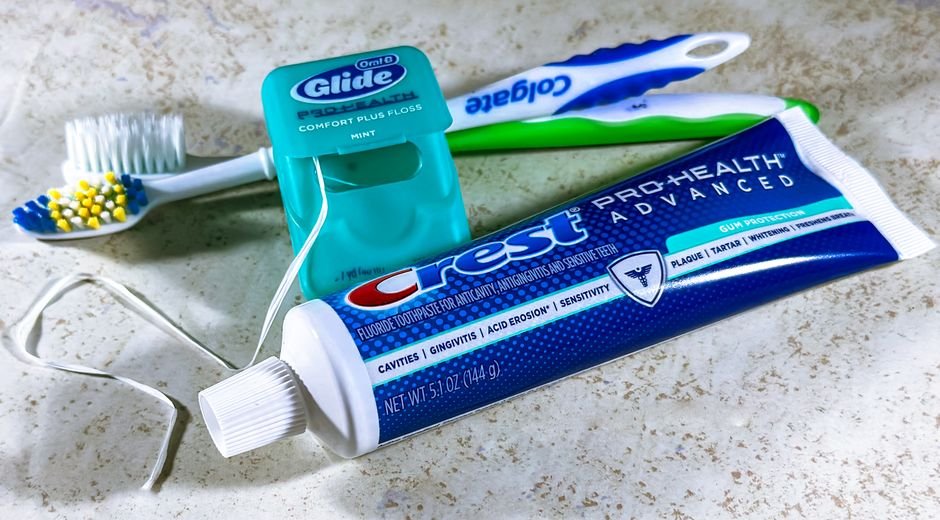
The realistic fix is not finding more time, it is reducing the friction involved in the routine that already exists. Keeping toothbrushes, toothpaste and floss in one visible, easy-to-reach spot removes a small but real barrier. Pairing brushing with an existing habit, such as right after getting dressed, turns it into an automatic step rather than a decision that has to be made fresh every single day.
A routine sticks when it is anchored to a fixed point in the day rather than left to happen “whenever there is time.” Linking brushing to another daily event, such as straight after breakfast or immediately before the last story of the evening, gives the habit a consistent trigger. Without that anchor, the routine drifts, and drifting routines are the ones most likely to be missed entirely on hectic days.
Keeping the routine short also protects it. A realistic two-minute brush, done properly, achieves more than a rushed five-minute attempt that half the household resents. Using a timer, a favourite short song, or a two-minute app turns effective brushing into a predictable habit rather than a guessing game, which makes it far easier for every family member to complete without being reminded repeatedly.
Yes, two minutes twice a day is genuinely sufficient when the technique covers all the necessary surfaces. The goal is not speed for its own sake, it is making sure every section of the mouth, outer, inner and chewing surfaces, gets brief but deliberate attention rather than a few quick passes concentrated on the front teeth alone.
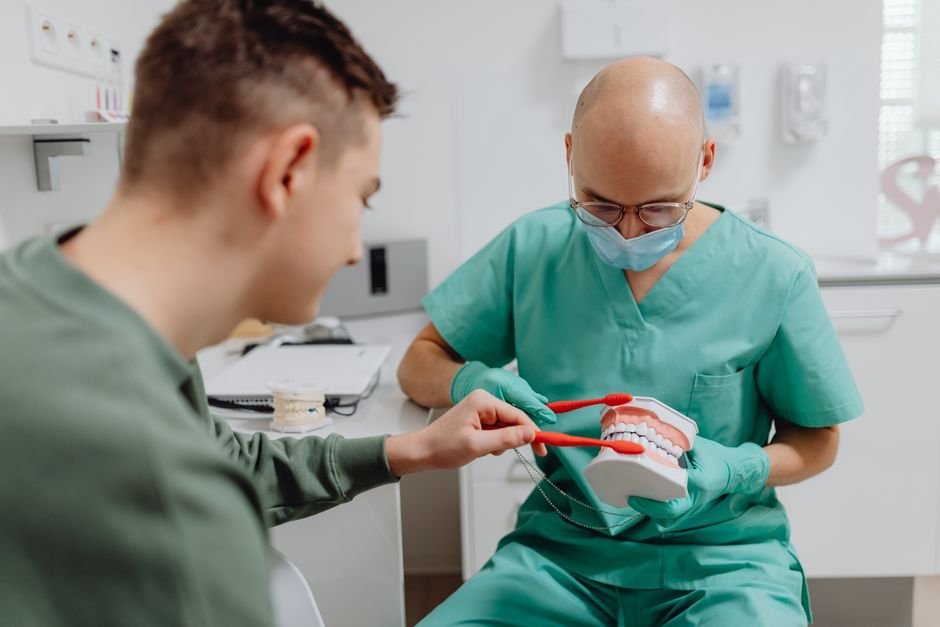
Splitting the two minutes into four thirty-second sections, one for each quadrant of the mouth, gives structure without needing to watch the clock constantly. Many electric toothbrushes include built-in timers that pulse every thirty seconds as a prompt to move on. For manual brushing, a visible kitchen or bathroom timer works just as well and helps everyone, especially children, learn what a proper two minutes actually feels like.
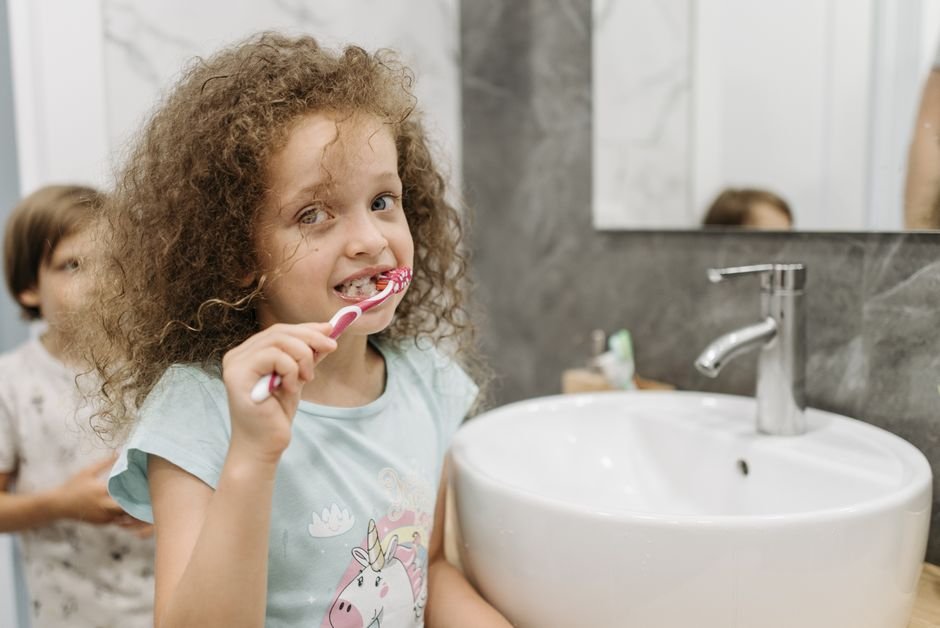
Children cooperate more readily when they feel some ownership over the routine rather than having it done to them. Letting a child choose their own toothbrush, pick the order they brush their teeth in, or hold the toothpaste tube themselves gives them a sense of control that reduces resistance, even when a parent still needs to finish the job properly afterwards.
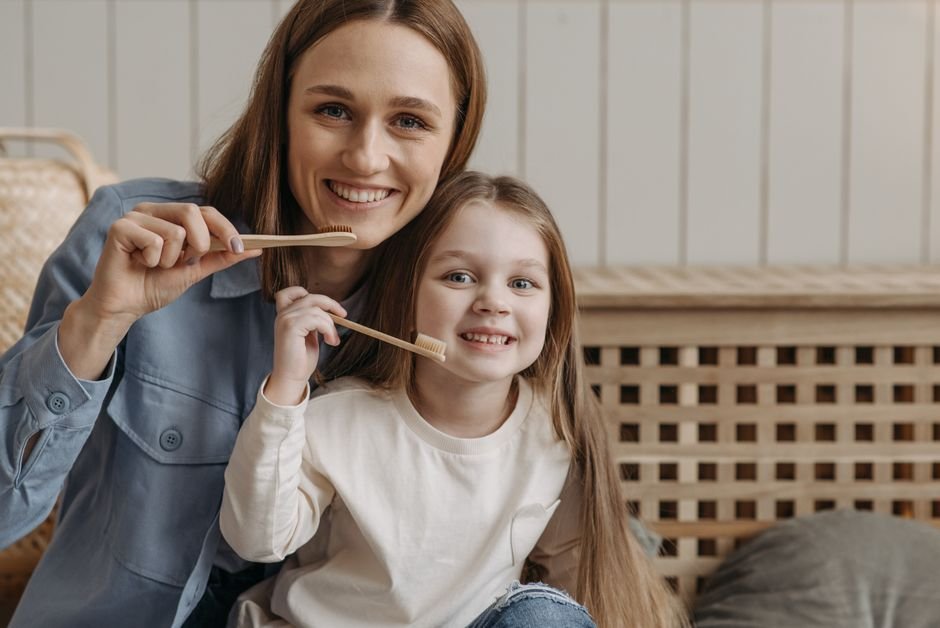
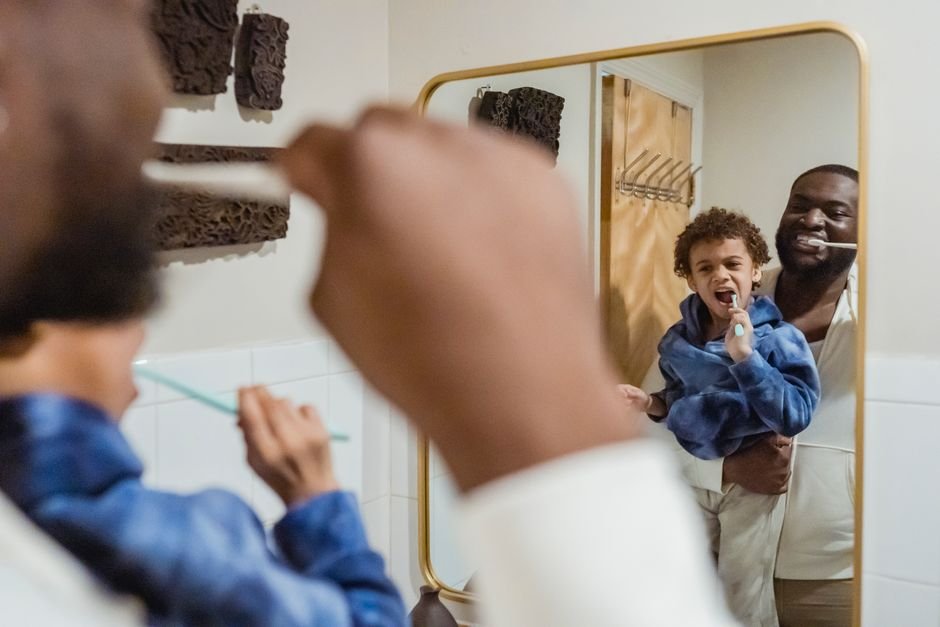
Brushing alongside your child, rather than only supervising, models the behaviour and turns it into a shared moment instead of an instruction. A visual chart with stickers for consistency, or simply brushing together while chatting about the day, keeps the routine low-pressure. The aim is steady participation over time, not a perfect performance on any single occasion.
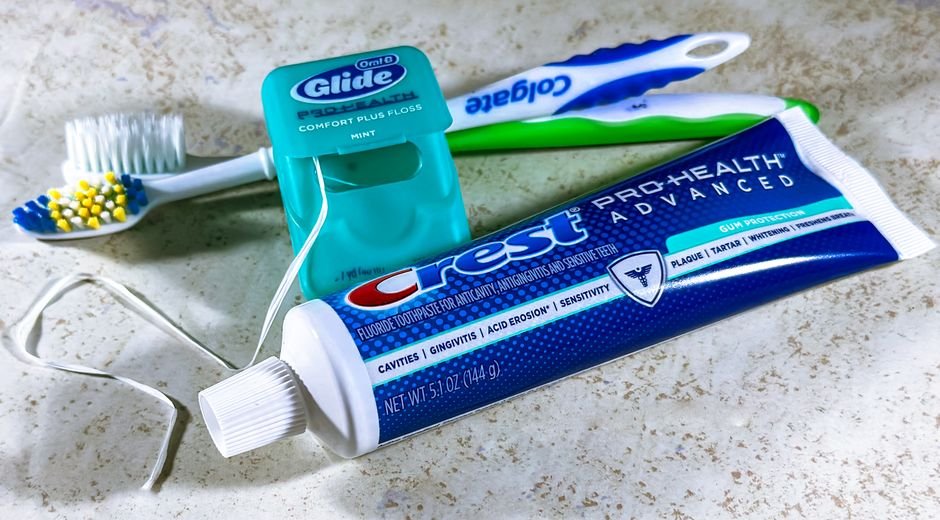
Flossing fits far more easily into a rushed schedule than most people assume, particularly once it is treated as its own thirty-second step rather than an optional extra tacked onto brushing. Pre-threaded floss picks remove the fiddly threading process entirely, which makes them a practical choice for both adults and children who are still building the habit.
Timing flossing for the evening routine, rather than the rushed morning one, tends to work better for most households, since evenings usually have a little more flexibility. Keeping floss picks in a small container next to the toothbrushes, rather than in a separate drawer, removes the extra step of searching for them, which is often the real reason flossing gets skipped.
The core steps of a routine, brushing twice daily and flossing once, should stay the same every single day regardless of how the schedule shifts. What can reasonably change between weekdays and weekends is the timing, not the content. A slightly later morning brush on a weekend is perfectly fine, as long as it still happens before food and after waking.
Treating weekends as a genuine pause from the routine is where consistency usually breaks down, since two days of skipped or rushed care each week adds up significantly over a year. Keeping the same order of steps, even if the clock time moves, helps the habit remain automatic rather than something that has to be renegotiated every Saturday and Sunday.
Travel and school holidays disrupt routines because familiar cues, the usual bathroom, the usual order of the morning, disappear. The most effective solution is a small, dedicated travel kit that stays packed and ready between trips, so there is no last-minute scramble to remember toothbrushes, travel-sized toothpaste and floss picks before heading out the door.
Keeping the same brushing order and timing while away, even in an unfamiliar bathroom, helps the routine transfer smoothly rather than falling apart entirely. For longer trips, involving children in packing their own kit gives them a sense of responsibility for the routine and makes it more likely to continue without constant reminders from a parent who already has enough to manage.
Batching means grouping related tasks together so the household moves through them in one efficient pass rather than starting and stopping repeatedly. In practice, this might mean everyone brushing teeth at the same shared time each evening, rather than each family member doing it separately whenever they happen to remember, which often means someone forgets entirely.
Preparing supplies in advance is another form of batching that pays off. Restocking toothbrushes, toothpaste and floss for the whole household in one shopping trip each month, rather than realising something has run out mid-routine, removes a common source of last-minute disruption. A small stock kept in a bathroom cupboard means convenience never has to come at the expense of proper care.
Convenience should guide how a routine is structured, not whether its essential steps happen at all. Shortcuts that save time without reducing effectiveness, pre-threaded floss, timer apps, batched supplies, are genuinely useful. Shortcuts that skip a step entirely, such as brushing for a few seconds or missing flossing most nights, quietly erode the routine’s value over time.
A useful test is asking whether a shortcut changes how the routine is done or whether it changes what actually gets done. Adjusting timing, order or tools to suit a busy household is sensible and sustainable. Dropping a core step because the morning is rushed is where convenience stops supporting oral care and starts working against it instead.
A realistic daily routine takes around four to five minutes per person in total, split between a two-minute morning brush, a two-minute evening brush, and a short flossing step. This is enough time to cover every surface properly without requiring a lengthy, elaborate process that is difficult to maintain on busy days.
The most common reason is that the routine is not anchored to a fixed point in the day, so it competes with other morning or evening tasks for attention. When brushing and flossing are linked to an existing habit, such as right after breakfast or before the last bedtime story, they become far less likely to be skipped.
Most children develop the coordination needed to brush effectively on their own gradually, and many still benefit from a parent finishing or checking the job well into their primary school years. Involving a child in the routine earlier, even with some parental help, builds the habit while ensuring the brushing itself remains thorough.
Electric toothbrushes can make the routine easier to sustain because many include a built-in two-minute timer and require less manual technique to brush effectively. That said, a manual toothbrush used correctly for the full two minutes, twice a day, is just as effective. The right choice comes down to what each family member will actually use consistently.
Keeping a dedicated travel kit packed and ready, rather than assembling one at the last minute, is the simplest way to maintain consistency during school holidays or trips. Keeping the same order and timing of the routine, even in an unfamiliar setting, also helps the habit transfer smoothly instead of lapsing until everyone returns home.

What and when a family eats together has a surprisingly direct effect on children’s dental health, since mealtime patterns often

Children are far more likely to stick with good oral care habits when they see parents practising the same routines
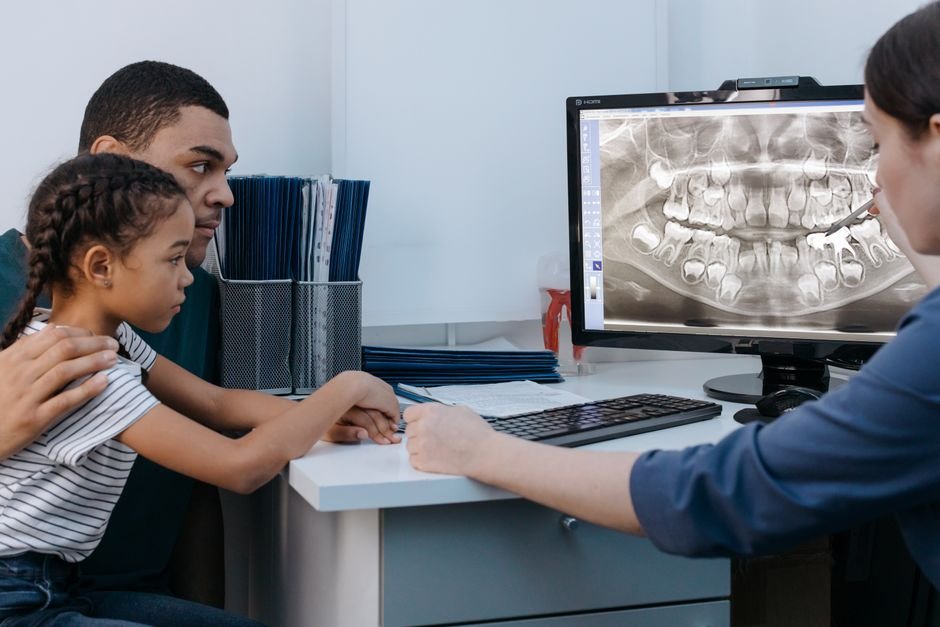
Most dentists recommend a child’s first dental visit by their first birthday, or within six months of their first tooth
 English