






























Amritsar offers some of the most established dental care in Punjab, with well-known clinics on Ranjit Avenue, The Mall, Queens Road and Lawrence Road, and two dental teaching hospitals in the city. Here are 8 well-reviewed local options for general, family and cosmetic dental care, plus practical advice for residents and for visitors from overseas who plan treatment during a trip home.
Key takeaways
We used publicly available information to put this list together, chiefly each clinic’s own website, the dentists and services it describes, and the strength of its public patient review profile. We looked for practices with clear information about their team and treatments, and we included the city’s two dental teaching hospitals because many local families rely on them. This list is not paid for and is not ranked in order. Details such as timings and staff change over time, so please confirm everything directly with the clinic before you book.
Near Shemrock Public School on Ranjit Avenue, Sahib Dental Clinic is led by Dr Sahib Tej Singh, who holds a BDS and MDS and is a member of the Indian Dental Association. The clinic is open from Monday to Saturday and covers routine fillings as well as implants and orthodontic work.
Singh Dental Care runs several clinics across Amritsar with a large team. Its dentists include Dr Navneet Kaur (MDS, Pedodontist), Dr Deepali Sandhu (MDS, Endodontist), Dr Sameer Saini (MDS, Orthodontics) and Dr Gagandeep Singh Arora (MDS, Oral and Maxillofacial Surgeon), so families can find most kinds of care within one group.
On Queens Road, Parekh Dental Clinic is a multi-speciality practice offering an unusually broad list of treatments, from gum surgery and laser dentistry to kids’ dentistry and clear aligners. It also offers in-house dental radiology and Zoom whitening.
Dr Om Parkash Dental on The Mall is a family practice with a history spanning several decades. It has five MDS-qualified dentists in-house, offers a free first consultation and states that emergency care is available around the clock. It also welcomes international patients.
World Dental Care treats both local families and patients travelling from abroad, and runs a 24×7 helpline. Its treatment list covers cosmetic work such as laminates and laser whitening, as well as implants, orthodontics and oral surgery.
The Clove Dental Lawrence Road clinic in Pals Tower is the local branch of a large national dental network and has a strong local review profile. It suits patients who like standardised processes and the option to continue treatment at another branch if they move city. The branch is closed on Mondays.
The Punjab Government Dental College & Hospital on Majitha Road is a long-established government dental institution. It provides dental care to people from Amritsar and nearby districts through its clinical departments, and the college states that 24-hour emergency services are available.
Run by the Shiromani Gurdwara Parbandhak Committee, Sri Guru Ram Das Institute of Dental Sciences & Research is a dental teaching institution with departments in orthodontics, prosthodontics, paediatric dentistry, periodontics and oral surgery. It is a practical option for patients who need treatment across several fields.
Many people from the Punjabi community abroad arrange dental work while visiting family in Amritsar. This can work well, but it needs planning. Contact the clinic before you travel, share any recent X-rays and describe what you hope to achieve. Ask for a provisional plan and an estimate of how many visits are needed, so you can judge whether the treatment fits within your stay.
Simple treatments such as cleaning, fillings and a single root canal can often be completed within a short trip. Implants, multiple crowns and orthodontics take longer because bone and gums need time to heal, and adjustments may be needed later. Avoid squeezing complex work into the last few days before a flight. Ask for copies of your records, X-rays and a written summary so that a dentist at home can continue your care if needed.
Amritsar’s two dental colleges treat a large number of patients each day. Their main advantage is that many departments sit under one roof, so a patient who needs an extraction, a root canal and a denture can be seen by the relevant teams without being sent elsewhere. Teaching hospitals also see a wide range of complex cases, which can be reassuring for unusual problems.
Waiting times can be longer than at a private clinic, and some procedures may be carried out by postgraduate students under the supervision of senior faculty. This is a normal part of dental training and is closely supervised, but appointments may take more time. Ask at registration how the department works, which days it runs clinics and how follow-up visits are booked.
Diabetes is common in Punjab, and it has a two-way relationship with gum disease. Poorly controlled blood sugar makes gums more prone to infection and slows healing, while long-standing gum inflammation can make blood sugar harder to control. Signs to look out for include bleeding when brushing, red or swollen gums, bad breath that does not go away and teeth that feel loose.
If you have diabetes, tell your dentist and mention your most recent blood sugar readings. Regular scaling, careful brushing twice a day and cleaning between teeth with floss or interdental brushes all help. Your dentist may suggest more frequent check-ups. Keeping gums healthy is part of looking after your general health, not just your smile.
Weddings, Lohri, Diwali and Gurpurab celebrations bring plenty of mithai, sweet tea and late nights. Frequent sugary snacks throughout the day are harder on teeth than the same amount eaten with a meal, because each snack starts a new acid attack on the enamel. Sticky sweets that cling to the teeth are particularly risky.
Enjoy festive food but try to keep sweets to mealtimes, rinse with water afterwards and do not skip brushing before bed, however late it is. If you are planning cosmetic treatment such as whitening or veneers before a family wedding, book well in advance. Leaving it until the last week risks rushed decisions and leaves no time to adjust the result if something does not feel right.
When comparing clinics, ask a few simple questions. Who will carry out my treatment, and what are their qualifications? Do you take X-rays on site, or will I need to go elsewhere? How do you sterilise instruments? What happens if I have a problem after treatment, and how quickly can I be seen? Clear, confident answers suggest a well-organised practice.
For larger treatment, ask how many visits are needed and what aftercare involves. If a warranty is mentioned for crowns or implants, ask exactly what it covers and what you need to do to keep it valid. A clinic that welcomes questions and explains things without jargon is far more likely to give you a good experience than one that rushes you towards a decision.
Dentists in India must hold a recognised BDS degree and be registered with their State Dental Council, which in Amritsar is the Punjab Dental Council. You can ask the clinic to show the registration certificate. Dentists offering specialised care often hold an MDS in their field.
Implant treatment normally takes place in stages, with a healing period between placing the implant and fitting the final crown. A short trip may be enough for an assessment or the first stage, but you will usually need a second visit or a dentist at home who can complete the work. Discuss timing with the clinic before travelling.
Yes. Both dental colleges in Amritsar provide treatment to members of the public through their clinical departments. Registration procedures and clinic days vary, so it is best to check with the hospital before you visit.
Bleeding gums are most often caused by plaque building up along the gum line, which leads to inflammation known as gingivitis. It usually improves with careful brushing, cleaning between teeth and a professional clean. If bleeding continues, or you have diabetes, see your dentist promptly.
Some Amritsar clinics state that they offer round-the-clock emergency help, so check your clinic’s details in advance. If you have facial swelling spreading towards the eye or neck, difficulty breathing or swallowing, a high fever or a serious face or jaw injury, go to a hospital emergency department straight away.

What and when a family eats together has a surprisingly direct effect on children’s dental health, since mealtime patterns often

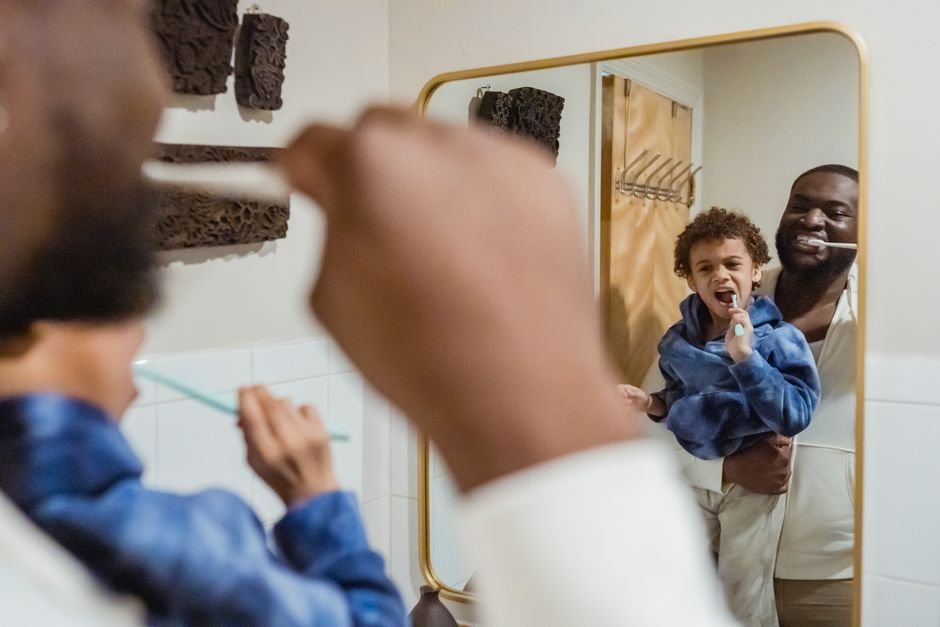
Children are far more likely to stick with good oral care habits when they see parents practising the same routines
Most dentists recommend a child’s first dental visit by their first birthday, or within six months of their first tooth
 English