
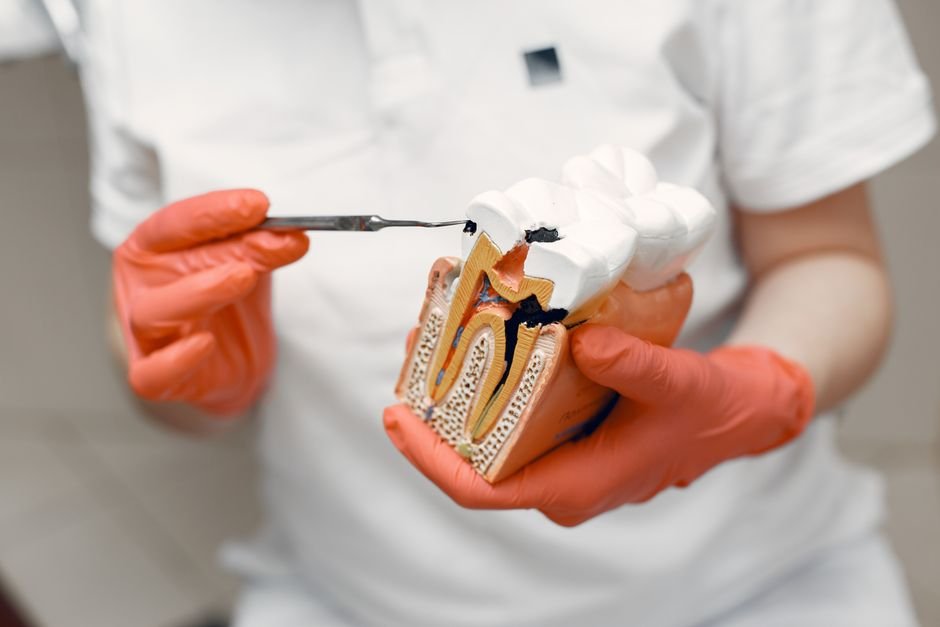


































Screen time affects teeth mainly through what it does to snacking patterns: children glued to a tablet or television tend to nibble continuously rather than eating at set times, and this constant grazing keeps sugars and acids in contact with the teeth for far longer than a few structured meals and snacks would. It is not the screen itself that causes cavities, but the mindless, drawn-out eating it tends to encourage. Understanding this link gives families a practical way to protect their children’s teeth without banning devices altogether.
Key takeaways
When children are absorbed in a programme, game or video, their attention is on the screen rather than on their food. Eating becomes an automatic, background activity rather than a deliberate one, which means portions are less controlled and eating continues well past the point of actually being hungry. Parents often notice that a bowl of crisps or biscuits set down at the start of a programme is finished without the child really registering how much they have eaten, simply because the hand keeps returning to the bowl out of habit rather than appetite.
This pattern is especially common because screen time frequently overlaps with relaxed, unsupervised moments in the household routine, such as after school or before bed. Without a parent actively present at the table, there is less natural pause between bites, and snacking can stretch across an entire episode or gaming session. The result is not necessarily more food overall, but food consumed in a steady trickle over a long stretch of time, which is precisely the pattern that puts developing teeth under the most sustained pressure.
For tooth health, frequency of eating is a bigger factor than total quantity. Every time sugars or refined carbohydrates are eaten, the bacteria in dental plaque produce acid that attacks the enamel for around twenty to thirty minutes afterwards. If a child eats a large snack in one sitting, the mouth experiences one acid attack and then has time to recover. If the same amount of food is spread across two hours of grazing during a film or game, the mouth can be under near-continuous acid attack, because each new bite or sip resets the clock before the previous attack has fully settled.
This is why dental professionals generally advise limiting the number of separate eating occasions in a day rather than obsessing purely over sugar content. A child who has three meals and two defined snacks is giving their teeth several recovery windows. A child who nibbles on and off throughout an afternoon of screen time, even on relatively modest amounts of food, may be exposing their enamel to acid for a much greater proportion of the day, regardless of how careful the household is about overall diet.
Certain snacks are particularly common during screen time and particularly unhelpful for teeth. Sticky sweets, dried fruit and chewy lollies cling to the grooves and surfaces of teeth long after swallowing, extending the period of acid exposure well beyond the eating itself. Crisps and other starchy snacks break down into sugars in the mouth and can lodge between teeth, while biscuits and chocolate combine sugar with a texture that is easy to eat continuously without noticing. Fizzy drinks and juice, often sipped slowly over a long viewing session, are especially problematic because they bathe the teeth in sugar and acid simultaneously.
None of these foods need to be banned outright, but recognising which ones tend to appear during screen time helps families make more informed swaps. Foods that are eaten quickly and cleared from the mouth by saliva, rather than lingering on tooth surfaces, are far kinder to enamel. The issue is rarely one snack in isolation; it is the combination of a clingy, sugary food and an extended, low-attention eating session that does the most cumulative damage over weeks and months.
Saliva plays a constant, quiet role in protecting teeth. Between eating occasions, it neutralises acid, washes away food debris and helps redeposit minerals like calcium and phosphate back into the enamel, a process known as remineralisation. This natural repair cycle needs a reasonably acid-free window to work effectively, generally around thirty to sixty minutes after the last bite or sip. When a child grazes throughout a screen session, that window never fully opens, because each new mouthful restarts the acid cycle before saliva has had a chance to finish its repair work.
Over time, this means the balance tips towards ongoing demineralisation rather than repair, which is how early enamel weakening and, eventually, cavities develop. It is a slow, cumulative process rather than something that happens after a single snacking session, which is exactly why habitual grazing during regular screen time is more concerning than the occasional treat. Giving the mouth predictable breaks from eating, even short ones, allows this background repair system to keep pace with everyday wear.
One of the simplest changes a household can make is deciding, in advance, when screen-time snacks happen rather than leaving a bowl within arm’s reach for the entire session. Serving a portion at the start of a programme and treating that as the snack for that sitting, rather than continually refilling, naturally limits both the quantity eaten and the number of separate acid attacks on the teeth. Some families find it helpful to pair screen time with a specific, agreed snack slot, similar to how meals are already structured, so eating still happens but within a clear boundary rather than as background noise.
It also helps to separate the screen from the kitchen or snack cupboard where possible, so that getting more food requires a deliberate pause rather than simply reaching sideways. Even small adjustments, such as putting snacks on a plate instead of eating from the packet, make consumption more conscious and easier to stop. These are not strict rules that remove enjoyment from screen time; they simply reintroduce natural stopping points that protect teeth without requiring constant parental intervention.
Choosing snacks that are lower in sugar and less likely to stick to teeth makes screen-time eating considerably safer for enamel. Options such as cheese, plain nuts for older children, raw vegetable sticks, or plain popcorn tend to clear the mouth quickly and do not feed acid-producing bacteria in the same way as sweets or biscuits. Fresh fruit is a reasonable choice too, though it is best eaten in one sitting rather than picked at slowly, since its natural sugars still contribute to acid production if grazing continues for a long period.
Drinks matter just as much as food. Replacing fizzy drinks, juice and flavoured milk with plain water during screen time removes one of the biggest sources of prolonged sugar exposure, since these drinks are so often sipped continuously rather than finished promptly. Water has the added benefit of helping rinse the mouth and support saliva function rather than working against it. Keeping a simple household rule of water as the default screen-time drink is one of the most effective, low-effort changes a family can make.
Changes to snacking routines tend to stick far better when they are introduced gradually and framed as a normal part of family life rather than a sudden restriction. Rather than removing favourite snacks altogether, many families find success in adjusting when and how they are offered, such as reserving a favourite treat for after a meal rather than during an entire film. Consistency across the household matters too; children respond better when the same expectations apply every time, rather than rules that shift depending on who is supervising or how tired everyone is.
Modelling the behaviour helps considerably as well. When parents also treat screen time as separate from constant snacking, children absorb that pattern more naturally than through instruction alone. Small, positive language, such as framing water as the “screen-time drink” rather than banning a sugary one, tends to reduce pushback compared with outright prohibition. The goal is a sustainable household habit, not a single strict rule that causes resentment and is abandoned within a fortnight.
Children are generally more willing to follow a habit when they understand, in simple terms, why it exists. Explaining that teeth need quiet breaks from food to repair themselves, using language appropriate to their age, gives snack-time boundaries a reason beyond “because I said so.” Even a brief, friendly explanation of how sugary or sticky foods behave differently in the mouth compared with water or cheese can shift a child from resisting a rule to actively participating in it.
Involving children in choosing their own screen-time snacks from a pre-approved, tooth-friendly selection also builds a sense of ownership rather than restriction. Letting them help decide on a reasonable snack time, or track their own water intake during a long viewing session, turns oral health into something they are managing rather than something being imposed on them. This kind of early involvement tends to carry forward into better independent habits as children grow older and have more control over their own snacking choices.
No, screen time does not directly harm teeth. The concern is the mindless, prolonged snacking that often happens alongside it, which increases how often sugars and acids contact the teeth throughout the day.
Fewer, more defined snacking occasions are generally kinder to teeth than constant grazing. Each time food or a sugary drink is consumed, the mouth experiences a period of acid attack, so spacing eating out reduces the number of these attacks even if the total amount of food eaten stays similar.
Switching the default screen-time drink to plain water instead of juice or fizzy drinks is one of the simplest and most effective changes, since sipped sugary drinks are a major source of prolonged acid exposure.
They are a better source of nutrients than sweets, but dried fruit is sticky and clings to tooth surfaces, which can extend acid exposure in a similar way to chewy sweets. Fresh fruit eaten in one sitting is a gentler option for teeth.
Saliva generally needs around thirty to sixty minutes without further eating or sugary drinks to neutralise acid and begin repairing enamel. Regular snacking breaks of this length during longer screen sessions help protect teeth over time.

What and when a family eats together has a surprisingly direct effect on children’s dental health, since mealtime patterns often

Children are far more likely to stick with good oral care habits when they see parents practising the same routines
Most dentists recommend a child’s first dental visit by their first birthday, or within six months of their first tooth
 English