






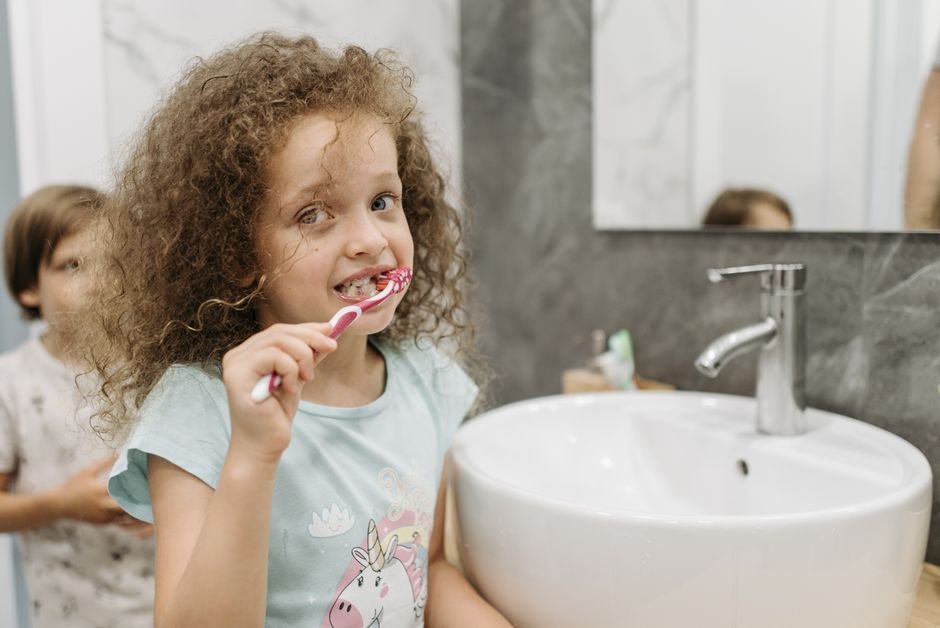























Family oral health routines work best in busy households when they are simplified, anchored to existing daily habits, and designed to survive imperfect days rather than requiring everything to go exactly to plan. Households juggling school runs, work schedules, and multiple children’s needs often struggle not because they lack knowledge about oral care, but because the routine itself is too fragile to withstand a hectic morning or a late evening. Building in flexibility from the start makes consistency far more achievable.
Key takeaways
A routine with too many steps or too rigid a structure tends to collapse the moment the household schedule is disrupted, which happens frequently in homes juggling multiple children’s activities, work demands, and unpredictable mornings. The more complex a routine is, the more likely it is to be skipped entirely on a difficult day rather than adapted.
Simpler routines, built around the essentials of brushing twice daily and flossing once, are far more resilient. They can flex to fit a rushed morning without falling apart completely, which matters more for long-term consistency than an elaborate routine that only works when the day goes according to plan.
Attaching a new habit to something the family already does reliably, such as brushing immediately after breakfast or right before the bedtime story, reduces the mental effort required to remember it. This kind of anchoring works because it borrows the consistency of an already established routine rather than trying to build a new one from scratch.
Households that tie oral care to a fixed point in the day, rather than a vague intention to “do it sometime before bed,” tend to see far fewer missed sessions. The anchor acts as a built-in reminder that does not rely on anyone consciously remembering to prompt it.
Mornings are often the most time-pressured part of the day, which makes them the most likely point for oral care to be rushed or skipped. Laying out toothbrushes and toothpaste the night before, or keeping them somewhere highly visible, removes one small barrier that can otherwise cause delay during an already rushed morning.
Some families find it easier to fold brushing into the process of getting dressed, so it happens as part of a sequence rather than as a separate task competing for attention. The specific method matters less than finding a sequence that consistently fits into the morning without requiring extra decision-making.
Evenings often bring their own pressures, including exhausted children and parents trying to manage bedtime for multiple family members at once. Starting the wind-down routine slightly earlier, even by ten minutes, can create enough buffer to fit in unhurried brushing and flossing without it becoming the final rushed task before lights out.
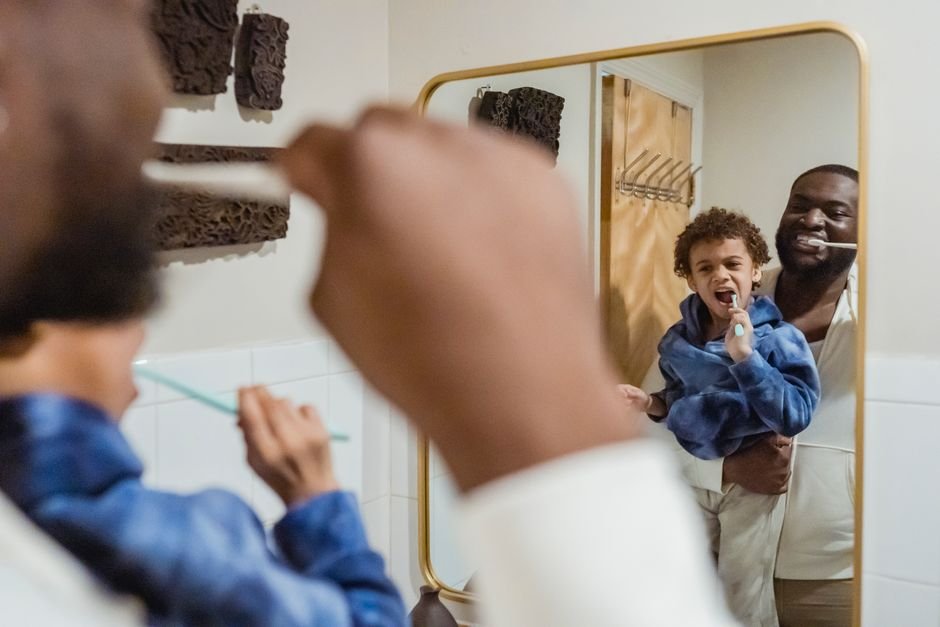
Batching oral care for all children together, rather than handling it individually and sequentially, can also save time in larger families. This does not mean rushing each child through the process, but rather organising the sequence so that supervision and encouragement can be delivered efficiently across multiple children at once.
As children grow, gradually shifting more of the responsibility for brushing and flossing onto them, with periodic spot checks rather than full supervision, reduces the daily burden on parents while still maintaining oversight. This transition should happen in stages rather than all at once, matched to each child’s actual coordination and reliability.
Households that hold onto full supervision long after a child is capable of managing more independently often find the routine more exhausting than it needs to be. Recognising when a child is ready for more independence, and communicating clear expectations around it, lightens the daily load considerably.
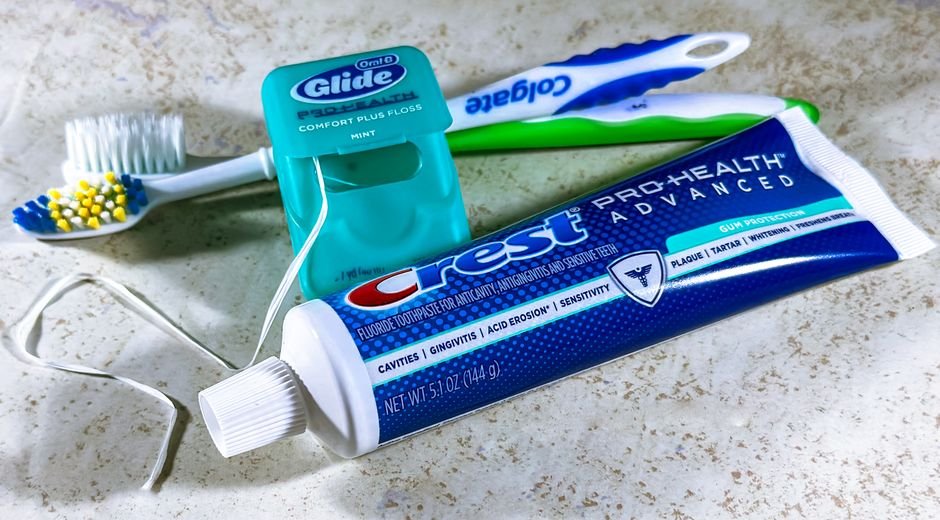
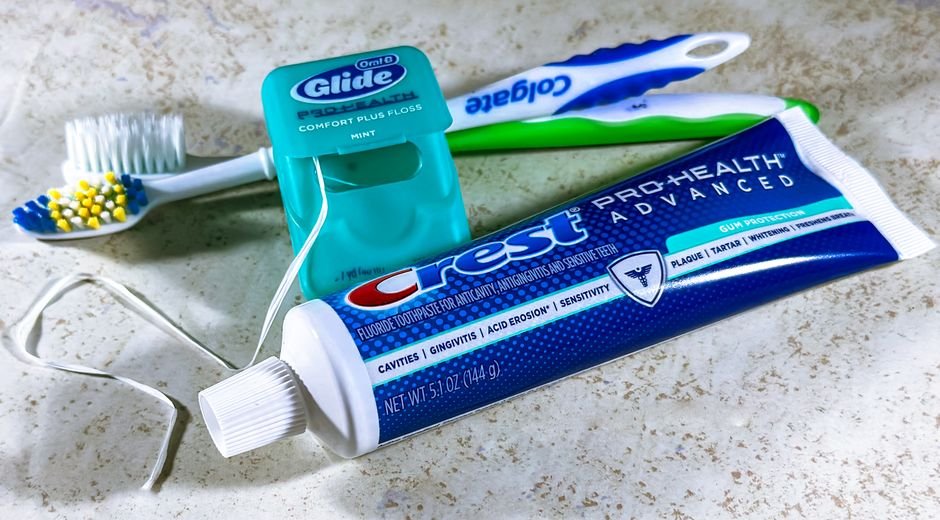
Keeping oral care supplies stocked, organised, and easily accessible removes a surprisingly common obstacle to consistency. Running out of toothpaste or misplacing a child’s toothbrush can derail an already tight morning or evening routine, especially in households managing supplies for several people at once.
Some families find it helpful to do a brief supply check on a set day each week, rather than discovering a shortage in the middle of a rushed routine. Assigning each family member their own labelled toothbrush and cup can also reduce confusion and speed up the process during busy periods.
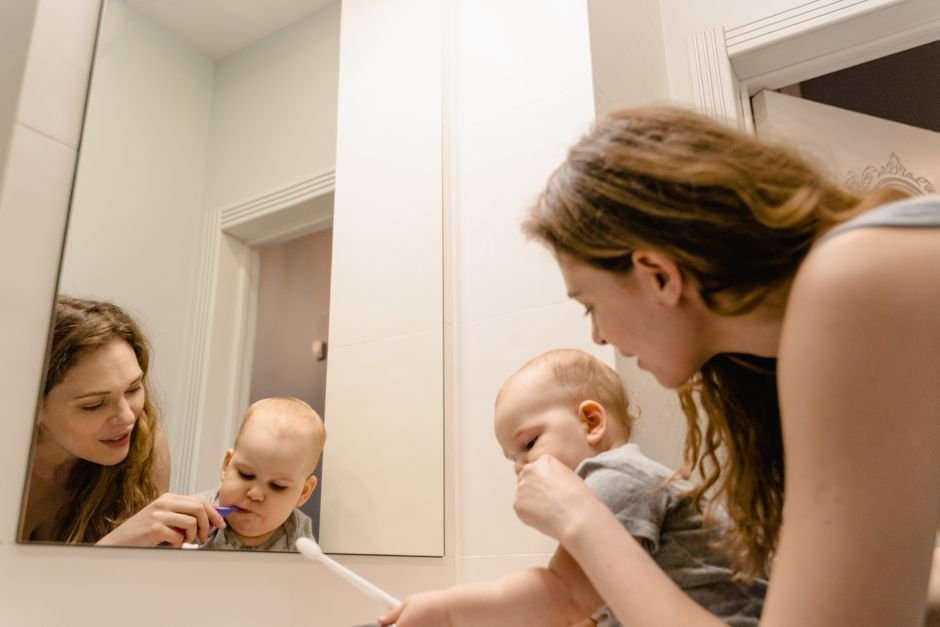
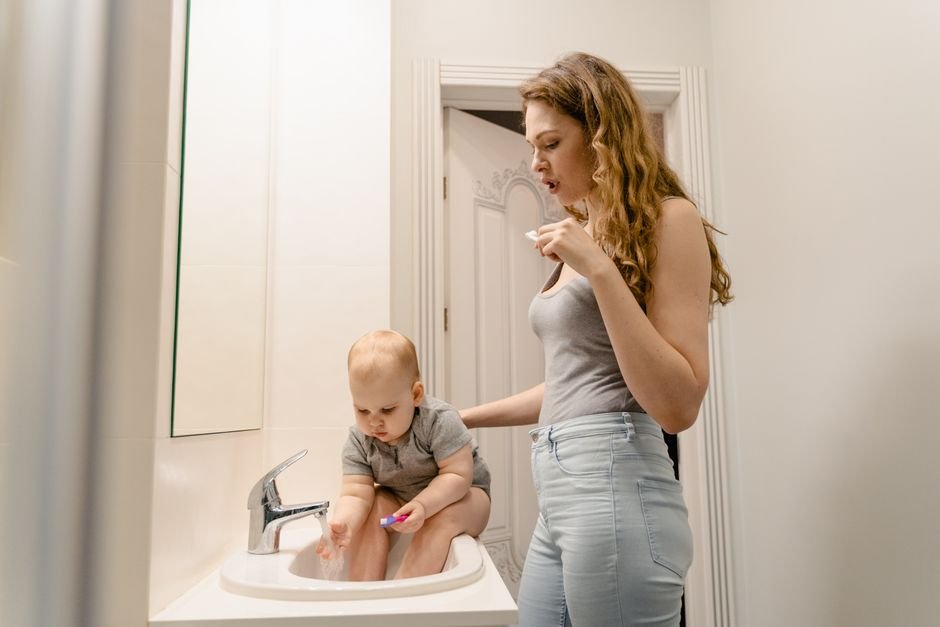
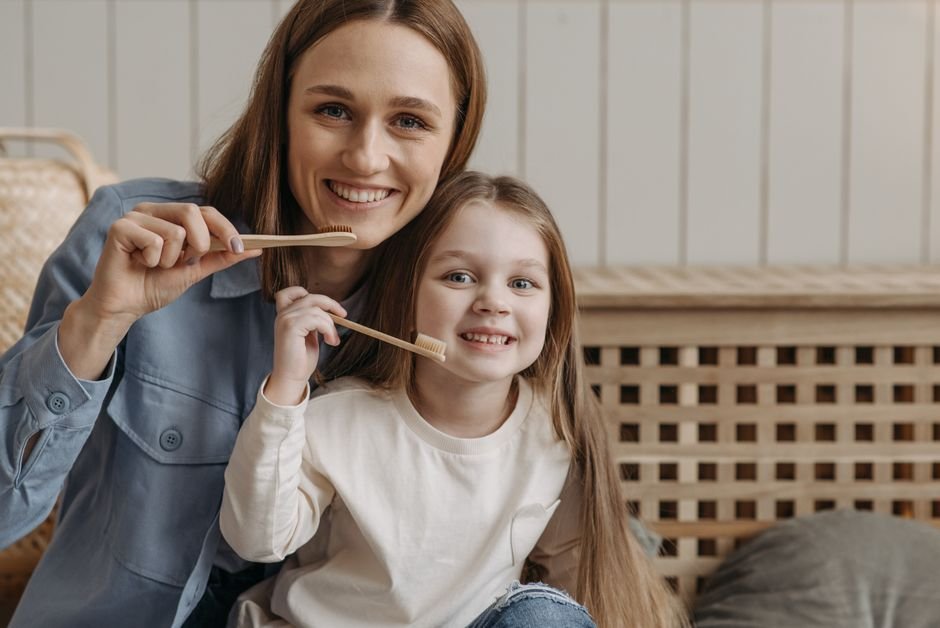
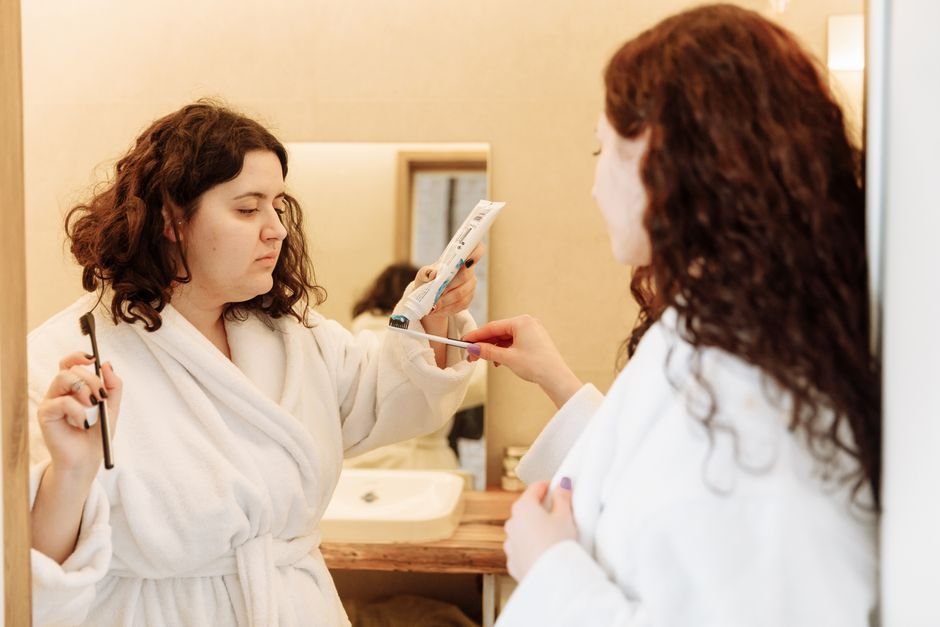
Children in busy households often take cues from what parents actually do rather than what they say, particularly when everyone is moving quickly through a routine. A parent who visibly follows the same routine, even briefly, reinforces its importance more effectively than instructions given while multitasking elsewhere.
This does not require parents to make a production of their own oral care, simply to be present and visibly consistent often enough that children absorb it as a normal part of the household rhythm rather than something only expected of them specifically.
Weekends, holidays, and travel are common points where routines slip, often because the anchors that normally structure the day, like a school morning schedule, are not present. Recognising this in advance and consciously choosing a substitute anchor, such as right after breakfast even on a lazy weekend morning, helps maintain consistency.
Travel kits with a compact toothbrush and travel-sized toothpaste kept ready to go can remove the friction of packing oral care items at the last minute. Treating these disrupted periods as requiring slightly more intentional planning, rather than simply hoping the routine holds, tends to produce better results.
A simple visual chart, particularly for younger children, can help both kids and parents see at a glance whether the routine has been followed consistently over a week. This does not need to be elaborate; even a basic checklist on the bathroom mirror can provide enough visibility to catch slipping patterns early.
For busy households, this kind of light tracking is less about reward systems and more about maintaining awareness. It is easy to assume a routine is going well simply because it feels familiar, when in reality certain days or certain family members are consistently being missed.
If oral care is being skipped frequently despite genuine effort, it may be a sign that the current routine is not realistically matched to the household’s actual schedule and energy levels, rather than a sign that more willpower is needed. Redesigning the routine around what is truly sustainable is usually more effective than trying harder within an unworkable structure.
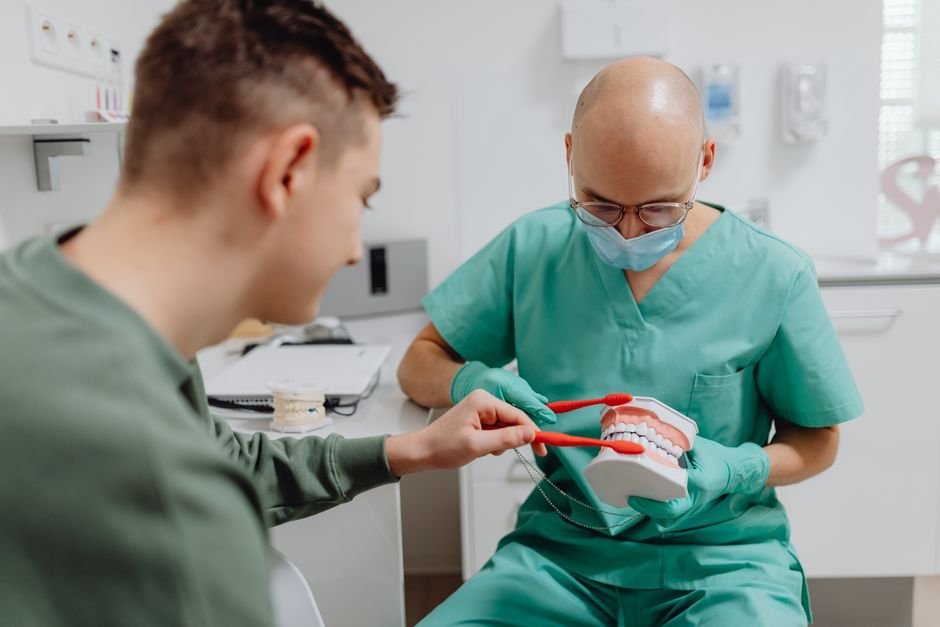
Discussing recurring difficulties with a dentist can also help, since they can suggest practical adjustments, such as different products or simplified techniques, tailored to a family’s specific constraints rather than generic advice that assumes more time and energy than a busy household actually has.
Anchoring oral care to an existing daily habit, such as right after breakfast or immediately before the bedtime story, tends to produce the biggest improvement, since it removes the need to consciously remember a separate task.
Batching the routine so all children brush around the same time, with a parent supervising the group rather than handling each child separately and sequentially, tends to save time without sacrificing quality of care.
This varies by child, but a gradual shift toward independent brushing with periodic parental spot checks typically begins around the early school years and increases as coordination and reliability improve.
Keeping a dedicated travel kit with compact supplies ready at all times removes a common barrier. Anchoring the routine to a consistent point in the travel day, such as right after breakfast, also helps maintain consistency.
A flexible routine that can bend without breaking on difficult days tends to outperform a strict one, since it is more likely to be maintained consistently rather than abandoned entirely when the day does not go as planned.

What and when a family eats together has a surprisingly direct effect on children’s dental health, since mealtime patterns often

Children are far more likely to stick with good oral care habits when they see parents practising the same routines
Most dentists recommend a child’s first dental visit by their first birthday, or within six months of their first tooth
 English