





































A child’s diet has a direct and lasting effect on how strong and healthy their teeth become, because sugars and starches feed the bacteria that cause decay, while calcium, phosphates and other minerals supply the raw materials enamel needs to form properly. Frequent exposure to sugary or acidic foods and drinks softens enamel and increases the risk of cavities, whereas a balanced diet rich in whole foods, dairy and fresh produce supports strong tooth structure from the moment the first tooth appears. In short, what children eat and how often they eat it shapes their oral health for years to come, often more than any other single habit.
Key takeaways
Children’s teeth, particularly baby teeth, have thinner enamel than adult teeth, which makes them more vulnerable to the acids produced when bacteria break down sugars in the mouth. Because the jaw and permanent teeth are still developing underneath the baby teeth, poor nutrition during these early years can affect not only the teeth present now but the structure and strength of the teeth still forming beneath the gums. This is why paediatric dentists consistently point to diet as one of the most controllable factors in a child’s long-term oral health.
Beyond decay prevention, diet also influences the mineral density of enamel as it forms, jaw development, and even the alignment of teeth as they erupt. A varied diet that includes adequate calcium, protein and vitamins supports healthy tissue growth throughout the mouth. Conversely, a diet dominated by processed, sugary or highly acidic foods can leave teeth more porous and susceptible to early decay, sometimes appearing within a year or two of a tooth erupting. Establishing sound eating habits early sets a pattern that tends to continue into adolescence and adulthood.
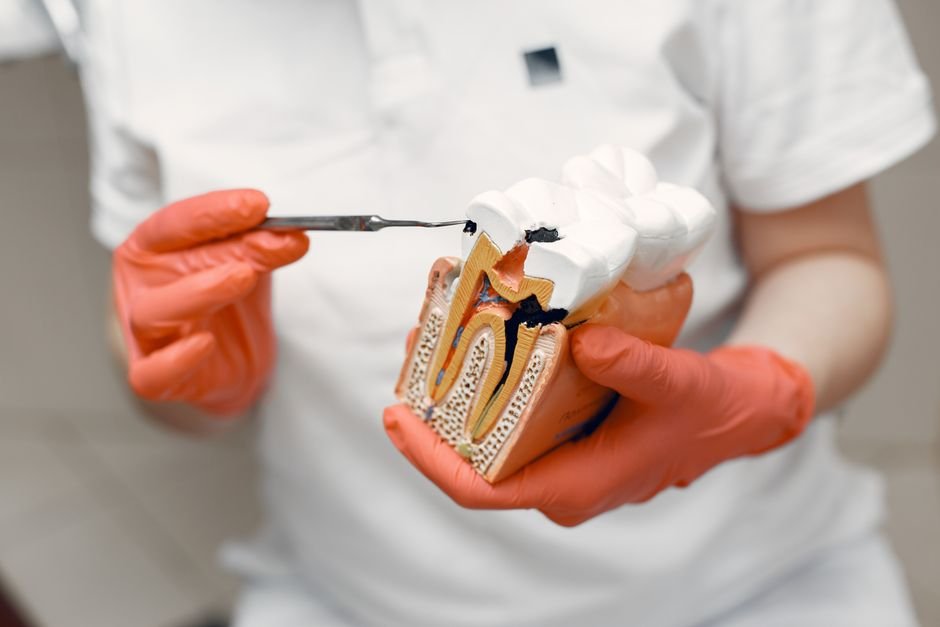
Sugar itself does not directly damage teeth; rather, the bacteria naturally present in the mouth consume sugar and produce acid as a by-product. This acid attacks the mineral structure of enamel in a process called demineralisation. Over time, repeated acid attacks without adequate recovery periods wear away enamel faster than the mouth can repair it, eventually creating a cavity. Sticky or slow-dissolving sugary foods, such as sweets that linger in the mouth or cling to the surfaces of teeth, tend to cause more harm than sugar that is cleared away quickly.
Hidden sugars are a particular concern in children’s diets, appearing in flavoured yoghurts, cereals, sauces and fruit juices that are not always recognised as sweetened products. Reading ingredient labels and being aware of total sugar content, rather than assuming a food is “healthy” because it is marketed to children, helps parents make more informed choices. Reducing overall sugar intake, and being especially mindful of sugary drinks between meals, remains one of the simplest and most effective ways to protect a child’s teeth from decay.
Frequency of sugar exposure is often more important than the total amount consumed in a day. Each time sugar is eaten, the mouth experiences an acid attack that can last twenty to thirty minutes or longer before saliva restores a neutral balance. A child who eats a sweet treat once after a meal exposes their teeth to one acid attack, while a child who sips a sugary drink or snacks on sweets throughout the day may keep their mouth in an almost constant acidic state, giving enamel little chance to recover.
This is why dental professionals often recommend confining sugary foods to mealtimes rather than allowing them as standalone snacks throughout the day. Eating sugar alongside a meal also increases saliva flow, which helps buffer acid more effectively than eating sugar in isolation. Parents can apply this principle practically by pairing an occasional sweet item with lunch or dinner rather than offering it as a mid-morning or late-afternoon snack, which reduces the number of separate acid attacks a child’s teeth experience each day.
Acid erosion is a separate but related process to decay, and it can occur even without bacteria or sugar being involved. Citrus fruits, fruit juices, flavoured sparkling water and some sports or soft drinks contain acids that soften enamel on direct contact. Because children’s enamel is comparatively thin, repeated exposure to acidic foods and drinks can wear it down more quickly than in adults, sometimes leading to sensitivity, a dull or transparent appearance at the edges of teeth, or a smoother, less defined tooth surface over time.
Limiting how often acidic drinks are consumed, offering water as the primary drink between meals, and avoiding the habit of swishing or holding acidic liquids in the mouth all help protect enamel. It is also worth noting that brushing immediately after consuming something acidic can do more harm than good, since enamel is temporarily softened; waiting around thirty minutes before brushing allows saliva to help re-harden the surface first. Serving acidic foods as part of a meal, rather than as an isolated snack, also reduces their impact.
Infants and toddlers face a specific risk known as early childhood tooth decay, which is strongly linked to prolonged bottle use, particularly when a bottle containing milk, formula or juice is given at nap time or overnight. During sleep, saliva flow decreases significantly, meaning any liquid left pooling around the teeth has a much longer opportunity to feed bacteria and produce acid. Front teeth are usually affected first and most severely, since they are in the most prolonged contact with the liquid.
To reduce this risk, it is generally recommended that bottles used at bedtime contain only water once a baby has teeth, and that infants are not left to fall asleep with a bottle propped in their mouth. Transitioning from a bottle to an open cup around the first birthday, as recommended by most paediatric guidance, also reduces prolonged exposure. Wiping a baby’s gums and early teeth with a clean, damp cloth after feeds, even before a toothbrush is introduced, helps establish healthy habits from the very beginning.
Calcium and phosphate are the two minerals most directly involved in building and maintaining strong tooth enamel, and both are found abundantly in dairy products such as milk, cheese and yoghurt. Cheese in particular has the added benefit of stimulating saliva production and having a relatively neutral or alkaline effect in the mouth, which can help counteract acid after eating. Leafy greens, nuts, and fortified plant-based milk alternatives can also contribute useful amounts of calcium for children who consume less dairy.
Vitamin D is equally important, since it allows the body to absorb and use calcium effectively; without adequate vitamin D, even a calcium-rich diet may not translate into strong teeth and bones. Crunchy fruits and vegetables, such as apples, carrots and celery, offer a further benefit by encouraging chewing that stimulates saliva flow and gently helps clear food debris from tooth surfaces. Protein sources such as eggs, fish and lean meats also supply phosphorus, rounding out a diet that actively supports the mineral density of developing teeth.
Snacking itself is not harmful, and growing children often need the additional energy and nutrients that snacks provide between meals. The key is choosing snacks that are less likely to feed decay-causing bacteria and structuring snack times so they do not blur into constant grazing throughout the day. Foods such as cheese, plain yoghurt, vegetables, nuts, and whole fruit tend to be gentler on teeth than crackers, dried fruit, sweets or biscuits, which are either high in sugar or break down into sticky starches that cling to tooth surfaces.
Setting a rough structure of two or three defined snack times, rather than allowing continuous access to food and drink throughout the day, gives teeth predictable recovery periods between acid exposures. Offering water rather than juice or flavoured milk alongside snacks further reduces the number of sugar or acid exposures a child’s teeth face. These adjustments do not require eliminating treats altogether; they simply involve being more intentional about when and how often certain foods are offered.
Saliva plays a constant, largely unnoticed role in protecting teeth by neutralising acid, washing away food particles, and supplying minerals that help repair early, microscopic damage to enamel before it becomes a visible cavity. A child who produces healthy amounts of saliva and gives their mouth adequate recovery time between meals and snacks benefits from this natural repair process throughout the day. Chewing firmer, fibrous foods also stimulates additional saliva flow, which is one reason crunchy fruits and vegetables are often recommended as tooth-friendly snacks.
Certain habits can reduce saliva’s protective effect, including frequent snacking that never allows the mouth to return to a neutral state, and dehydration, which can thicken saliva and reduce its buffering capacity. Encouraging children to drink water regularly throughout the day, particularly after meals and snacks, supports healthy saliva flow and gives this natural defence system the best chance to do its job. Understanding saliva’s role helps explain why timing and frequency of eating are just as important as the specific foods chosen.
Fruit juice, even when labelled as one hundred percent juice, contains natural sugars and acids that can contribute to both decay and enamel erosion in the same way sweetened drinks can. It is generally better to offer whole fruit, which contains fibre and requires chewing, and to treat juice as an occasional drink served with meals rather than a regular substitute for water.
There is no strict age requirement, but delaying regular exposure to added sugars for as long as practical allows a child’s palate to develop without a strong preference for very sweet foods. When sugary foods are introduced, offering them alongside meals rather than as standalone snacks helps limit their impact on developing teeth.
Milk contains natural sugars and can contribute to decay if it pools around a baby’s teeth for extended periods, such as during overnight bottle feeding. Once teeth have erupted, water is the safest option for nighttime bottles, while milk is best offered during the day or shortly before a final teeth-cleaning routine.
Yes. Permanent teeth begin forming beneath the gums well before they erupt, and adequate calcium, phosphate and vitamin D during these early years support the mineral structure of teeth that have not yet appeared. Poor nutrition during this developmental window can influence the strength of teeth long before they are visible.
Sugar-free products avoid feeding decay-causing bacteria, but many still contain acids that can soften enamel, particularly flavoured sparkling waters and some sugar-free soft drinks. They are generally a better choice than sugared alternatives, but water remains the safest everyday drink, and acidic sugar-free products are still best enjoyed alongside meals rather than sipped throughout the day.

What and when a family eats together has a surprisingly direct effect on children’s dental health, since mealtime patterns often

Children are far more likely to stick with good oral care habits when they see parents practising the same routines
Most dentists recommend a child’s first dental visit by their first birthday, or within six months of their first tooth
 English